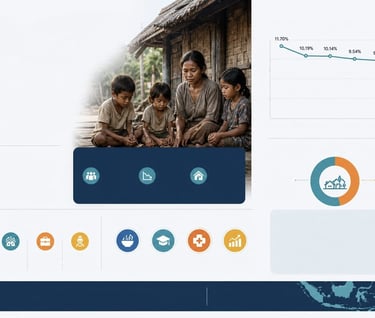
Below Poverty Line IN INDONESIA
Despite progress, millions of Indonesians still live below the poverty line. Together, we can build a more inclusive and prosperous future.
Below Poverty Line (BPL) refers to a condition where a household's income or expenditure in insufficient to meet basic needs for food and non-food items essential for a decent standar of living.
What is Below Poverty Line?
Poverty Line (March 2024)
Rp. 582,932
Source: Statistics Indonesia (BPS)
per capita per month
Who Are Most At Risk?
Poverty affects certain groups more significantly.
Large families with low education levels
People in rural and remote areas
Informal workers with unstable incomes
Elderly living without adequate support
Limited access to nutritious food
The Impact of Poverty
Reduced access to quality education
Limited access to healthcare
Lower productivity and opportunities
Key Facts (March 2024)
25.22
million people live below the poverty line
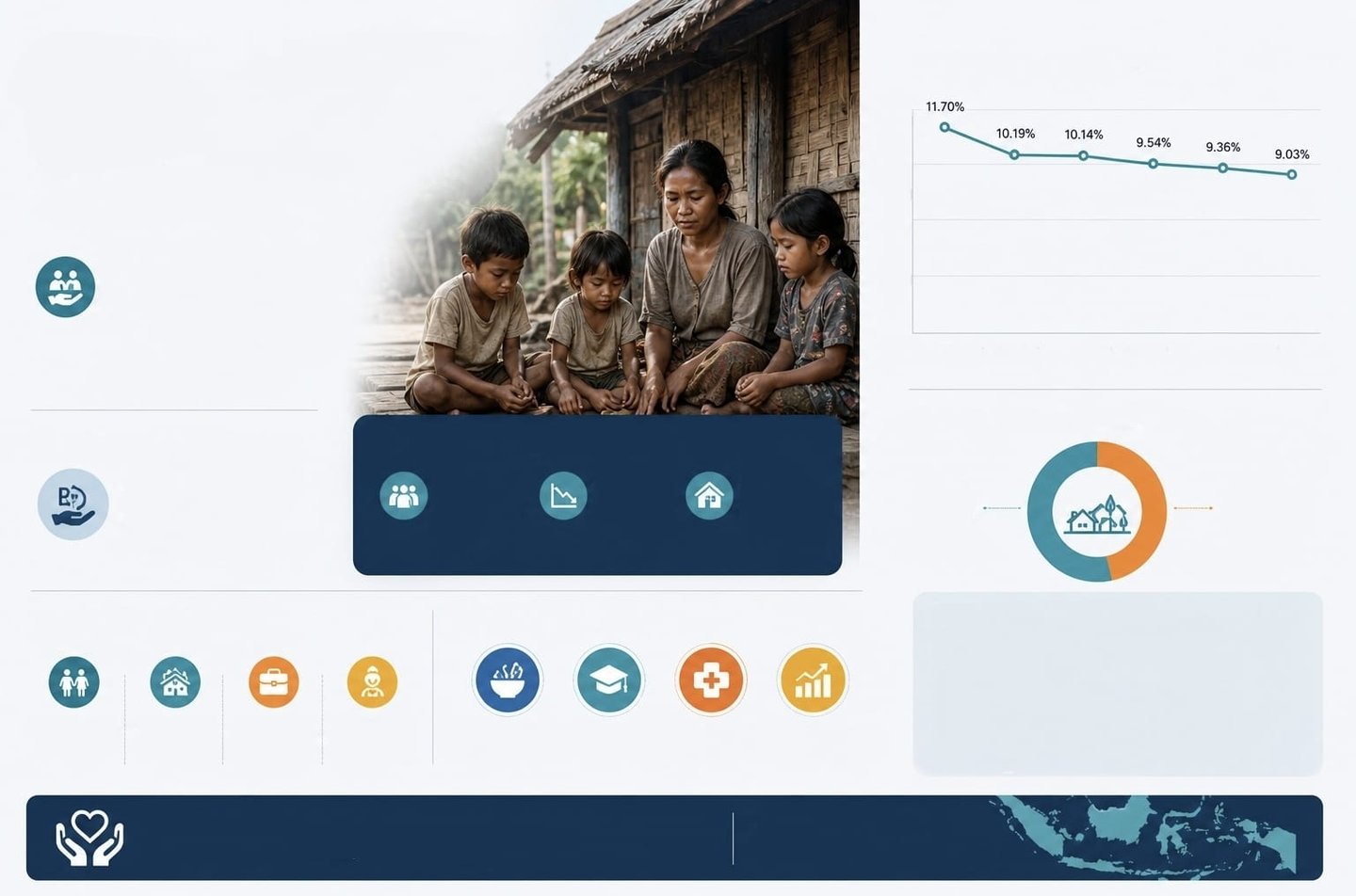
9.03%
of indonesia's population
6.64%
poverty rate in rural areas
Every individual deserves the opportunity to live a decent and dignified life.
Together, let's lift Indonesia above teh poverty line.
Poverty Rate Over Time
12%
9%
6%
0%
3%
2019
2020
2021
2022
2023
Mar 2024
Building a Better Future
Poverty By area (March 2024)
Urban
5.64%
Rural
12.34%
Reducing poverty requires collaboration between goverment, private sector
Improve access to education and skills
Create job opportunities
Strengthen social protection
Promote inclusive economic growth
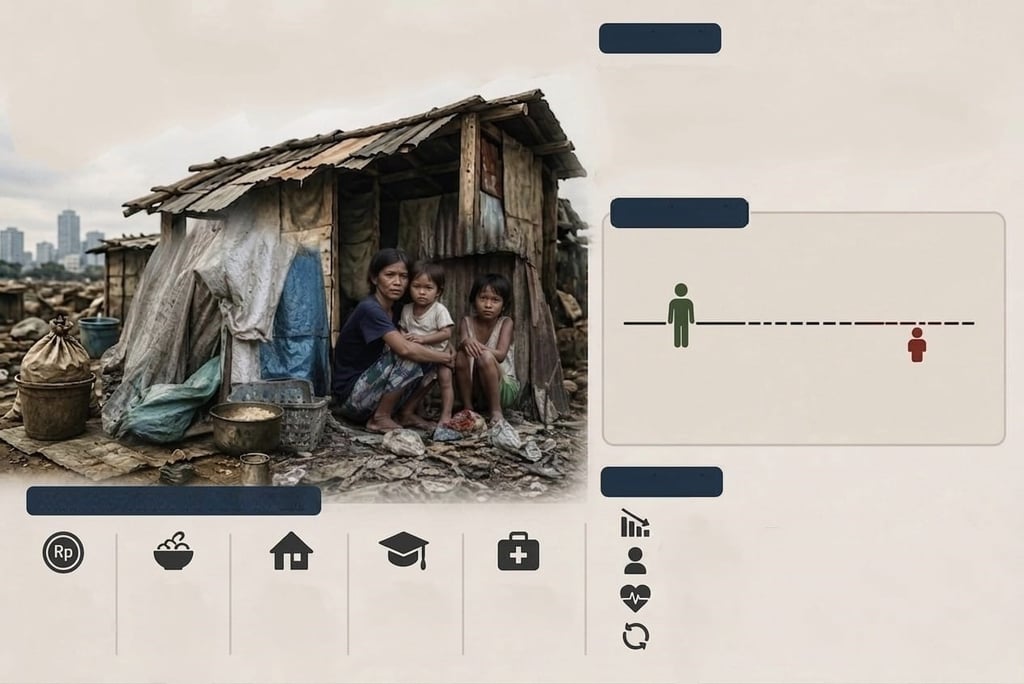
BELOW POVERTY LINE
When income is insufficient to meet basic needs for a decent life.
DEFINITION
ILLUSTRATION
CHARACTERISTICS OF A BPL FAMILY
Below Poverty Line (BPL) or being below the poverty line is a condition when the income of an individual or household is lower than the minimun standard of basic needs for a decent life, such as food, clothing, housing, education & health.
ABOVE POVERTY LINE
BELOW POVERTY LINE
POVERTY LINE
Income > basic needs for decent life
Income < basic needs for decent life
IMPACT
Low and unpredictable income
Difficulty meeting basic needs (food, clothing,
Living in unsuitable housing / slum environment
Limited access to education
Limited access to healthcare
Low quality of life
Low education and difficulty finding a decent job
Vulnerable to diseases and health problems
Difficult to escape the poverty cycle
“Below Poverty Line populations require targeted and sustainable socioeconomic interventions.”
“Communities living below the poverty line remain a priority for inclusive development strategies.”
“Empowering individuals below the poverty line through access to education and economic opportunities.”
“Driving measurable impact for those living below the poverty line through scalable solutions.”
“Supporting individuals below the poverty line to build resilient and dignified livelihoods.”
“Creating pathways for people below the poverty line to thrive in a rapidly evolving economy.”
“Beyond Survival: Uplifting Lives Below the Poverty Line.”
“Redefining Opportunity for Those Below the Poverty Line.”
Policy points that must be implemented:
Denpasar, Bali
CONTACT
@2026 Jembatan Lintas Kasih Foundation
LINK